How to Create a Digital Wellness Plan That Sticks


As a teenager I was on my phone all the fucking time. It was crazy. To my luck, at the age of 17, I had a few experiences and conversations that made me reconsider the way I was spending my time. I realized for myself that I wanted to get more out of my life. I also knew that if I wanted a better life, I had to work for it.
What I quickly realized is that the time I was spending on my devices, especially on my phone, was inhibiting my progress. For me, there were two major problems: first, dead simple, I was just wasting a good portion of my time, but secondly, the hours spent on YouTube and games were shaping my brain in a way that made it almost impossible to focus on more complex tasks and actually get stuff done.
So I tried to use my phone less, but guess what? Everyone who reads this post knows that this is way easier said than done. For the following years I was trying to learn more about our brains, about addictions, about how we can make behavioral changes last etc. It was a long way, and still there are days where I waste too much time on my phone (mostly when I am hungover 😉 )
But I also did find out many different tricks and exercises that helped me, and can also help you to establish a new relationship with your phone and other devices. A relationship where you are not being used, now you are in charge and you decide how you are going to use those tools so that they enrich your life and don’t steal your time, attention, and energy.
A digital wellness plan is about small, consistent changes that add up to a healthier relationship with technology. The keyword here is “relationship” – because whether we like it or not, our devices have become part of our daily lives, and like any relationship, they need boundaries, communication, and intentional care to thrive.
Also, the best way to kick off your new digital wellness plan is with a digital detox. Here, you can learn more about that.
Here, the quick version
- First analyze your current use. Use metrics and look at your behavioral patterns and how they influence you.
- Then create a vision of how your optimal screen times look like.
- Create a plan for at least three weeks of changes you want to implement.
- Implement max one change a day.
- Regularly check in

What Is Digital Wellness and Why You Need a Plan
Digital wellness is basically the practice of maintaining a healthy relationship with technology that supports your overall well-being. It’s not about throwing your iPhone in a drawer and going full hermit mode – it’s about being intentional with how, when, and why you use digital devices.
It’s simple, our devices and many of their apps are extremely powerful in “hacking” our psychology. If we do not have an honest conversation with ourselves about how much, why, and when we are going to use them, we will be spending way more time in front of screens than we would love to. All there is to the digital wellness plan is defining what is right for YOU, how YOU want to shape your relationship with YOUR devices.
The core components include managing screen time, creating boundaries around device usage, being mindful of your emotional responses to technology, and ensuring that your digital habits support rather than sabotage your sleep, relationships, and mental health.
Why should you even bother to keep your screentime in place? I mean, apart from the fact that your life will just fly by without you truly experiencing it, this scientific literature review summarizes many of the possible negative effects your devices can have on you. Your attention span radically decreases until you might develop ADHD like symptoms, you will roast your dopamine (reward) system, your overall mood might et worse, even depressive.
One thing I didn’t realize is that today’s algorithms are so advanced, they change our behaviour (so we are more predictable). Do you really want that?
Also, real experiences, truly memorable events, the ones that enrich your life, seldom happen in front of a screen. Your brain needs to be able to attach an experience to a memory to make it stick; sitting on your sofa is no experience.
If you want to get stuff done, you need to keep your screen time in check, you want to be able to focus for a prolonged time on your projects, you want to be able to delay gratification and put in the work, you want to be productive, etc.
Having a structured approach to technology use isn’t about being rigid – it’s about being free. We want to be free to create the life we desire. We can not do this if your devices control us.
I truly believe that hard work is one key cornerstone to living a fulfilled life and liking who you are. Use your time and energy to build something of value. Enable yourself to add value to other people. But this ability won’t come by itself, and you want to work for it, so you can be proud of yourself.
To do that, create a digital wellness plan, because all the devices and apps that exist today can be your best friend to reach your dreams, but left unchecked, they quickly turn into your worst enemy.
Intrigued by how to achieve that? Read on!!!
.
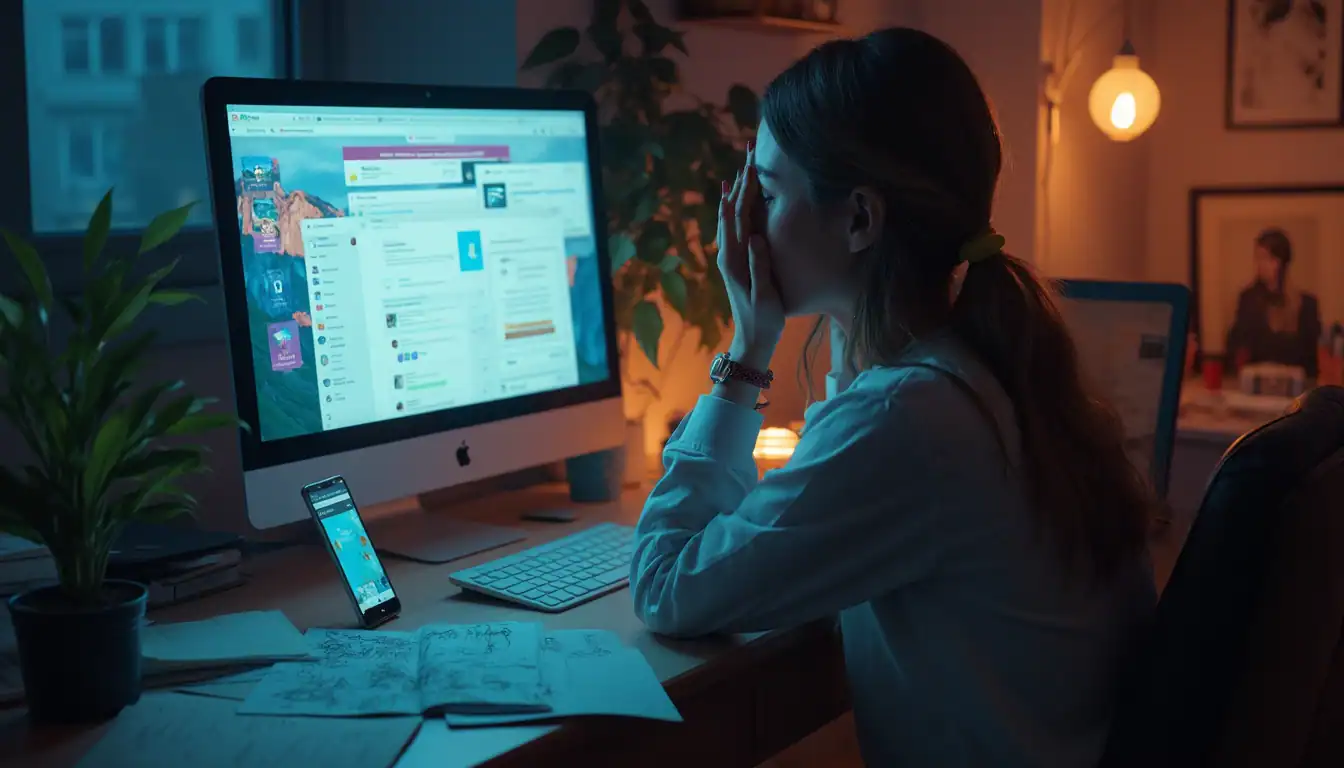
Assessing Your Current Digital Habits
Okay, let’s get real for a minute – before you can fix something, you need to know exactly what’s broken.
The first thing that you can and should do is go and check your metrics. How much is your average screen time? How many times do you unlock your phone? How much are you using which apps? Then if you wanna go deeper, just calculate how much that’s in a year or even your lifetime.
This puts a lot into perspective.
Once you got the objective stats, you can go to the more subjective part of it. How does your screen time affect you? Spend maybe one or two days where you don’t wanna change anything, you just observe: How do I feel before I use my devices, while I am using them, and after I use them?
Also, try to identify the times and situations where you are most likely to use your digital tools compulsively. These are going to be super important for the barriers we are gonna implement further on.

Creating your Digital Wellness Vision
So, once we know where we’re at, we need to know where we wanna go. Only then can we formulate a plan. So be realistic and set yourself some goals.
Here, it is not about getting specific; that is what we do later. It is much more about creating a vision of your optimal relationship with your devices. What would it look like if you had the control and you used your devices exactly how you decided you would?
Don’t forget to consider your family and work situation. If your job requires immediate email responses, setting a goal of checking email only twice daily isn’t going to work.
For me, the most significant change that I wanted was that the time on my phone I used to relax and chill was spent very consciously. I did not wanna get sucked into random reels for 30 minutes three times a day.

Creating Your Personalized Digital Wellness Framework
Your digital wellness framework needs to fit your actual life, not some idealized version of yourself. After plenty of trial and error, I figured out a system that actually sticks. However, that system only works for me. (and I cheat at times too, that is ok)
I want to get you here a quick overview on the most common changes you can make, but I wanna focus more on creating your plan. To find out more about digital habit changes read this post.
Here: some of the most effective forms of changes you can make
- Create zones where certain devices are restricted or completely forbidden. Example: no phone in the bedroom, and at the workspace only Calls and Chats are allowed.
- Similar to the first one, you can also create time windows where some gadgets are forbidden or restricted. Example: no emails from 10 to 12 ( so you can use this time to work on projects) or no phone at all in the morning before 9.
- Plan some regular activities that you do without any device. When I do any sports, I leave my phone at home, so I can focus fully on my body.
- Delete problem apps and only access via browser.
- Give time restrictions to problem apps, which you can’t or won’t delete.
- Remove all unnecessary notifications
- Induce friction and make your phone boring. For example, my home screen is black and apps are written, no logos at all. Whenever I want to open social media (which I delete and reinstall all the time), I need to wait 5 seconds, which makes me wanna open it less.
These are just some of the ideas you can use, but they are the 20% that give you 80% of the results. I highly advice you to start with the phone free zones and times, because these are soooooo effective and relatively easy to put into place.
We are here to make a plan that fits you. So, here is where the work begins. Look at your current use, your vision, and the tool that you now have in your arsenal. Now don’t change everything at once. We gotta plan. About one month is a good time frame for making all the changes you need to make and have a chance that they stick.
Your plan should look something like this:
- First define key topics for the week. Maybe the first week is all about phone-free zones.
- Then think about all the changes that belong into that category and asign a maximum one a day.
- Repeat for as many weeks as you need, and you’re done.
The plan is not hard, a little more than an hour, and you should have it. The hard part is following through. So we truly want to take it one step at a time.

Measuring Progress and Adjusting Your Digital Wellness Plan
Here is the thing: This is not a do it once and then forget it thing, this needs revision all the time. I like to go back to the analogy of having a relationship with your devices. In a relationship you don’t expect to talk once about problems and then forget it and all will be fine.
I review my progress once every month. Just having a quick but sincere look and answering a few very important questions:
- What is going well?
- What not so well?
- Has anything changed in my life that influences my plan (maybe a new job)
- What is my goal for the next 30 days?
Ah, and obviously, this all is easier if you don’t do it alone. So take a friend, your spouse, or your whole family and hold each other accountable.
Conclusion
Looking back on my journey with digital wellness, I can honestly say it’s been one of the most impactful changes I’ve made for my mental health and productivity. I feel so much better the days I have my phone in check.
The transformation didn’t happen overnight, and I definitely made my share of mistakes along the way. I had deleted my Instagram account 3 times, I did a 3-month digital detox, and I read a lot about the topic. It is not easy. But I can finally say that most of the days i have a completely health relationship with my phone.
You will mess up and cheat yourself all the time, that’s ok don’t be too rigid. It’s about getting right back on track and not about never loosing it.
Remember, digital wellness isn’t a destination you arrive at and then you’re done. It’s an ongoing practice that needs regular attention and adjustment.
Your future self will thank you for taking this first step toward a healthier relationship with technology. Trust me on this one – the benefits compound over time in ways you can’t even imagine yet. If you spent the last 10 years mostly being on a screen, you will discover a new and better version of yourself.